
PROBLEMS OF FOODPIPE
Esophagus (also known as food pipe) is the tube that carries food from your mouth to your stomach.
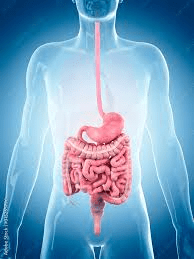
There are several types of diseases involving the esophagus many of them require thorough evaluation and surgical interventions.
One must have a vague idea of the anatomy to understand the disease. Food pipe starts from throat, runs down the chest and enters the abdomen passing through a small opening in the diaphragm which is a curtain like structure between chest and abdomen.
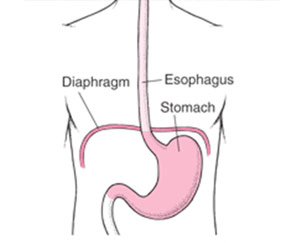
There is a valve like mechanism at the lower end of food pipe where it continues as stomach. This valve like mechanism prevents stomach contents like food and acid to come back in to the food pipe.
Few commonly encountered esophageal diseases are:
- Gastroesophageal Reflux Disease (GERD) –a very common chronic digestive disorder in which contents of the stomach like food, acid and occasionally bile comes back in to your food pipe because of defective functioning of the so called valve mechanism at the lower end. Typically it presents as heart burn.
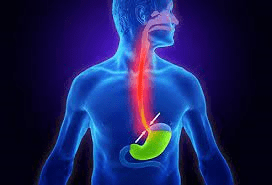
- The acid, bile, food damages the structure and function of food pipe and on long run leads to complications like stricture, Barret’s esophagus and cancer in few cases. Although most of the cases responds favourably to medicines there are many cases who require more careful evaluation and surgery in many cases settles the issue definitely.
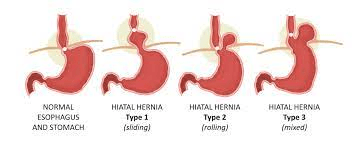
Hiatal hernia –the opening in the diaphragm (the curtain separating chest from the abdomen)through which esophagus passes from chest in to the abdomen is called hiatus. When there is weakness in this region it leads to upward movement of abdominal organs into the chest cavity through this hiatal opening. This condition is called hiatal hernia. Not all cases require surgery though. Such cases must be evaluated on case-to-case basis by an expert and if indicated surgery is the best option.
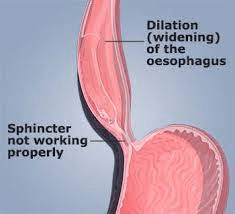
Achalasia – the forward pumping action of esophagus (food pipe) is lost and in addition the so-called valve mechanism fails to open properly. These two factors cause difficulty in proper passage of ingested material thereby causing feeling of obstruction (dysphagia). The degeneration of the nerves in your esophagus is the basic cause responsible.
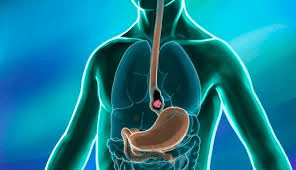
- Barrett’s esophagus – a condition in which the lining of the esophagus is replaced with tissue similar to the stomach lining. Barrett’s esophagus is often the result of long-standing gastroesophageal reflux disease (GERD) and can sometimes lead to esophageal cancer. It requires long-term surveillance with the possibility of surgery to reduce reflux.
- Esophageal cancer – can occur in any part of the esophagus. GERD is commonly associated with the cancers of esophagus especially the lower esophagus. If not diagnosed in early stages, cancers of esophagus carry poor prognosis as it can easily spread to your lymph nodes, windpipe, large blood vessels in the chest and nearby organs.
ESOPHAGEAL SURGERIES IN JABALPUR
Surgery for the esophagus can be done by conventional open technique as well as minimal invasive thoracosopic or laparoscopic techniques.
Laparoscopic fundoplication is the most common esophageal surgery being done world- wide. In this surgery part of stomach is wrapped around the lower end of food pipe to recreate the valve.
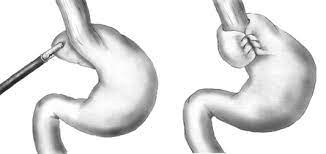
Although not difficult it is a surgery requiring masterly approach since too tight wrap will increase resistance and too loose a wrap will fail to serve the purpose.
Dr Digant Pathak is the only surgeon in Jabalpur carrying out laparoscopic fundoplication on regular basis successfully.
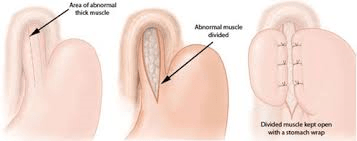
Laparoscopic Heller’s myotomy is another high end esophageal surgery requiring very skilled surgeon. Dr Digant Pathak is the first and only surgeon in Jabalpur to do laparoscopic Heller’s myotomy. In this surgery the poorly opening circular muscles at the lower end of esophagus and upper end of stomach is cut open to reduce the blocking action. Partial fundoplication is also added to reduce reflux.
Thoracoscopic esophagectomy after neoadjuvant chemotherapy (+/- radiotherapy) is being done for cancers of esophagus in properly selected cases. In this surgery the esophagus is removed and stomach is converted in to tube like esophagus and pulled up in chest to replace it and act as conduit to carry food downwards. Dr. Digant Pathak successfully did first thoracoscopic minimally invasive esophagectomy in Jabalpur
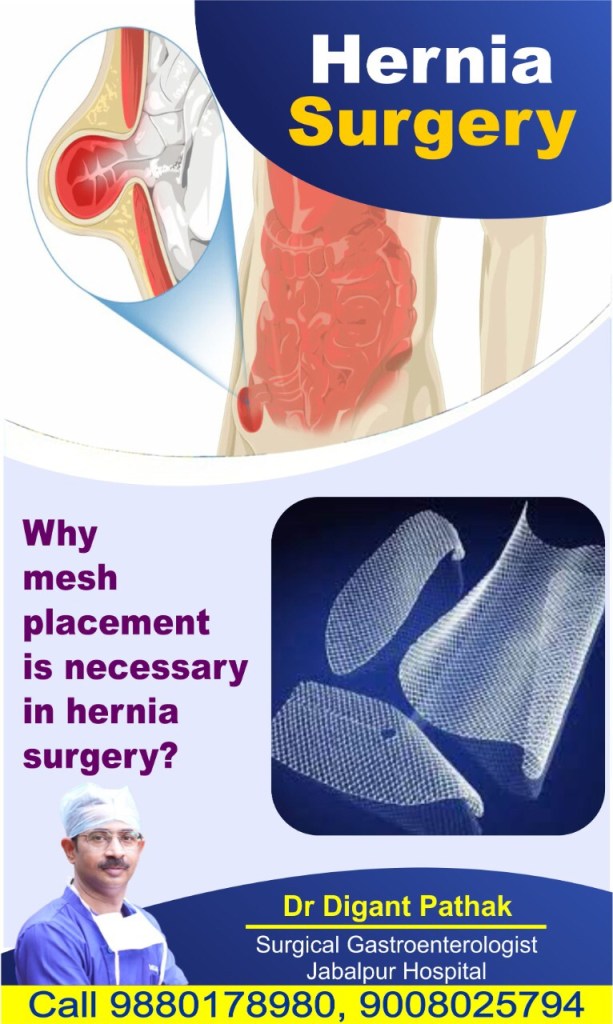
WHY MESH IS NECESSARY IN HERNIA SURGERY ??
Why mesh placement is necessary in hernia surgery?
When organ inside the abdomen strats coming out it is called hernia.
Surgery is the only answer to hernia.
During surgery we almost always put an artificial mesh (except in children) This mesh creates inflammation and acts as a platform over which new cells form & grow rapidly and thus makes the area strong.
In some cases like chemotherapy, smoking, obesity the cells are weak and are of lower quality thus the new tissue that forms is of relatively lesser strength therefore such cases are highly prone to develop hernia again even after mesh placement.
Hernia – why it is dangerous ?
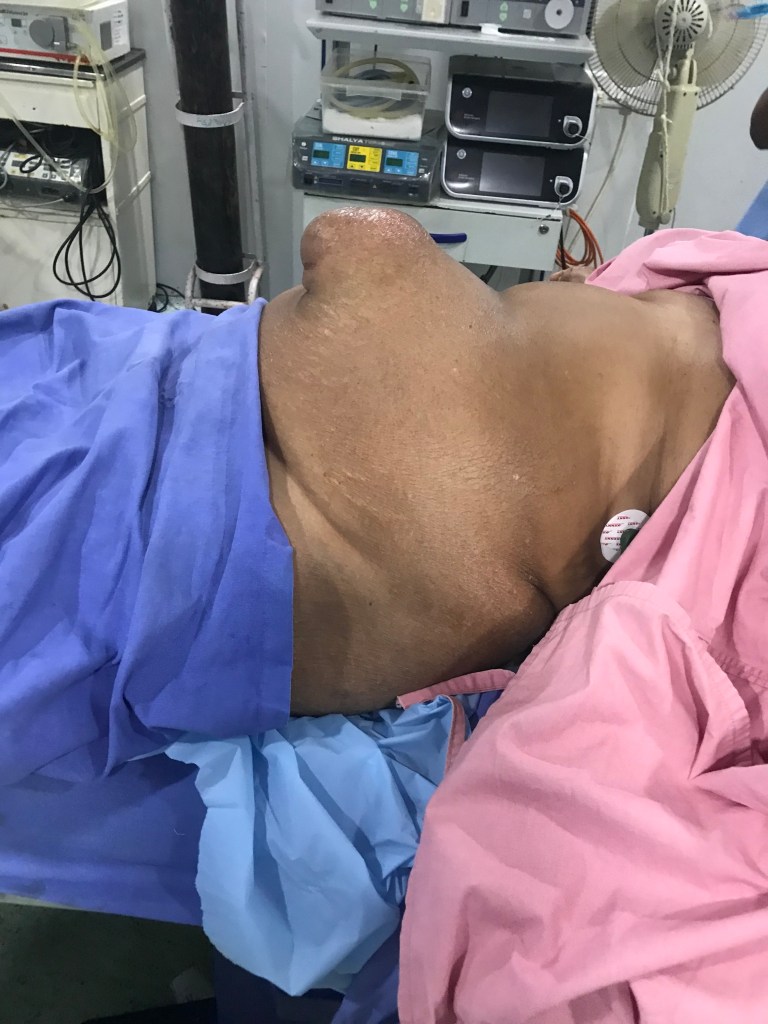
Hernia – a life threatening problem
Hernias are very common but oftenly neglected health problem. Its high prevalence is sometimes responsible for the negligence. Many times an asymptomatic layman thinks it to be only a cosmetically disfiguring problem and is actually not aware how dangerous it can turn out to be.
WHAT IS A HERNIA ?
To actually understand why hernias are dangerous one must know what is a hernia?
When the contents of the abdominal cavity starts coming out of the protection offered by the muscle layer of abdominal wall a hernia is said to developed. Any internal organs can come out especially intestines are highly prone for herniation. They might get caught in the hernia and thus their blood supply might get blocked. Here lies the real danger. If the blood supply is not restored in the golden hour the intestines may get gangrenous and this can endanger person’s life.
SO WHAT IS THE SOLUTION?
Surgical correction of the defect is the one and only solution for the hernia and it should be done as soon as the disease is recognized. Any delay might put the person’s life at risk.
WHAT ARE THE SURGICAL OPTIONS ?
Surgery can be done by traditional open technique in which hernia defect is corrected by making an inscision or by #laparoscopic technique in which only 2-3 small holes are made and whole surgery is conducted with minimal trauma and pain to the patients thereby making the recovery very fast and smooth.
 Digant pathak- Laparoscopic Surgeon in Jabalpur